Between barber visits, a beard does not grow out evenly. It grows out at the neck first, where the line softens into the throat, then at the cheeks, where strays climb toward the eyes. Home beard shaping is really about those two borders and knowing which tools handle them safely. In Rock Hill, most beard trouble at home comes not from doing too little but from one ambitious session with the wrong tool and a moving line.
The comparison below is the practical core: which border, which tool, and where the safe stopping point is. Everything outside those borders, the bulk, the shape, the length, belongs to the barber visit, where it can be done evenly and judged from every angle.
Home beard work, compared by job
| Job | Best home tool | Safe rule | Leave for the barber |
|---|---|---|---|
| Neckline cleanup | Trimmer or razor | The two finger rule: the line sits about two fingers above the Adam's apple, following the jaw's curve | Moving the line higher to look sharper, which shrinks the beard's foundation |
| Cheek line strays | Razor for strays only | Remove hairs clearly above the natural cheek line, one at a time | Carving a new, lower cheek line, which almost always ends up uneven |
| Mustache over the lip | Small scissors or trimmer | Trim hairs that cross the lip line, dry, a few at a time | Reshaping the mustache's whole outline in one sitting |
| Length and bulk | Comb only at home | Comb it out and leave the length alone | Freehand length trimming, the classic source of lopsided beards |
| Strays and split ends | Small scissors | Snip single hairs that stick out after combing, nothing more | Chasing every uneven hair, which thins one side by degrees |
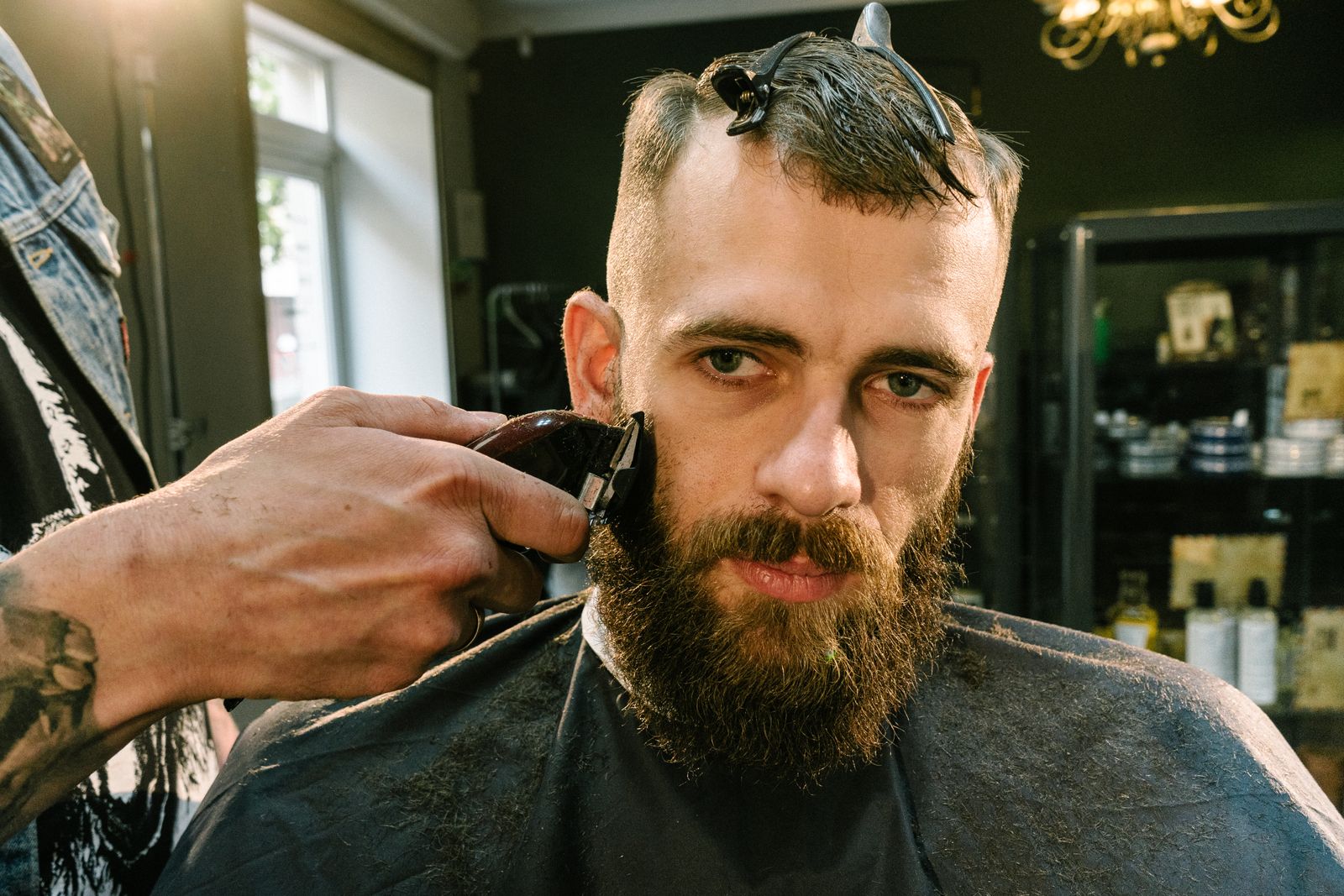
The two borders, done carefully
The neckline matters most, because a beard whose bottom edge has dissolved into the neck reads as ungroomed even at good length. Find the line with the two finger method: rest two fingers horizontally above your Adam's apple, and the top finger marks roughly where the beard should end, curving up toward the ears in a shallow U. Everything below that line goes, everything above it stays. Do it with the skin relaxed, looking straight ahead, not with your head tilted back stretching everything into a lie. The cheek line is the opposite discipline: less is more. Clear the strays above the natural line and stop. The natural line, followed honestly, looks better than a carved one on nearly every face.
At 1 Cut Above, beard trims reset both borders and the shape together, which is why the home job is maintenance, not redesign. If you book trims every few weeks, your home work shrinks to ten minutes a week of border patrol, which is exactly the division of labor that keeps beards looking intentional.
Oil, heat, and the daily two minutes
Shaping is half the story; condition is the other half, and it is fast. A few drops of beard oil worked through after a warm shower keeps the hair soft enough to lie where the shape puts it, and it keeps the skin under the beard from flaking, which is the source of most beard itch. Heat helps oil spread, so apply it warm and damp rather than to a cold dry beard, and comb through with the grain to distribute it. A quick comb in the morning resets the shape for the day. That is the whole daily routine: oil after the shower, comb, border check once a week. Beards that get more than this at home usually get worse, not better, because every extra session is another chance to move a line.
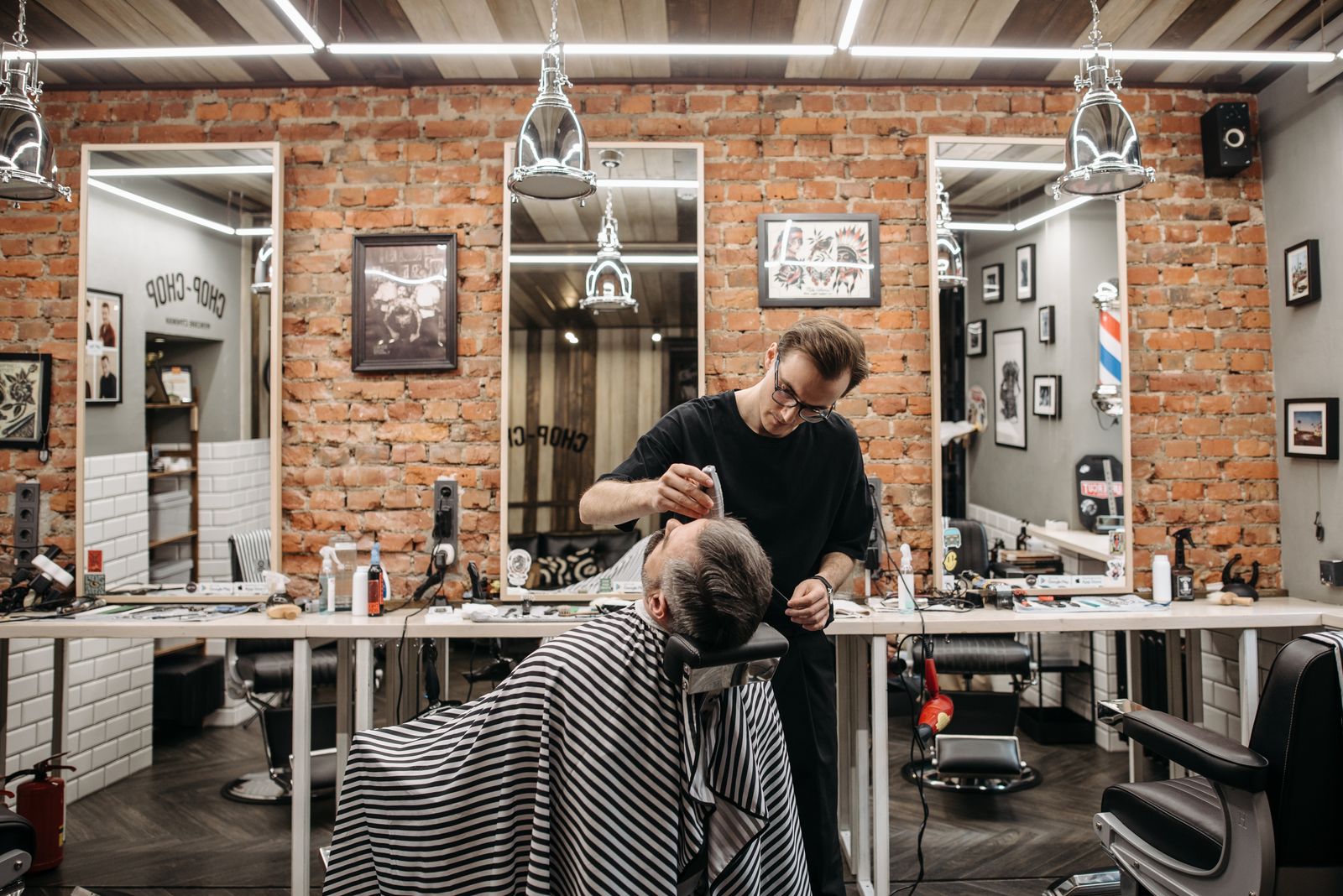
Knowing when to stop
The most valuable beard skill is stopping. Work in good light, do one border, then step back and look at the whole face before touching the other side. Symmetry is judged at arm's length, not at magnifying distance, and more beards have been ruined by the pursuit of perfect symmetry than by neglect. If you do take too much off one side, the fix is patience or a barber visit, never evening it up by degrees until both sides are shorter than you wanted. Put the trimmer down, comb it, and look again in an hour. A remarkable share of beard emergencies have downgraded themselves by then.
Common questions
Where should my beard neckline be?
About two finger widths above the Adam's apple, curving gently up toward the ears. Use the two finger test looking straight ahead with relaxed skin.
How often should I clean up the borders at home?
About once a week for the neckline and cheek strays. Daily sessions invite moved lines and irritation, and the beard does not grow fast enough to need them.
What does beard oil actually do?
It softens the hair so it lies in shape and moisturizes the skin underneath, which prevents most beard itch and flaking. A few drops after a shower is enough for most beards.
Photos in this guide are representative stock images.
← All guides from 1 Cut Above← Back to 1 Cut Above